No.07 March 2005 / REVIEWING THE OIL ISSUE IN DEPTH
SEND TO A FRIEND PRINT CLOSE   
THE CHALLENGES OF THE 21ST CENTURY
Curbing climate change and diversifying future energy sources to support economic development are the two main topics of this interview with Total’s Chairman and CEO, Thierry Desmarest.
The interview rounds off our feature on the future of oil by outlining the strategy pursued by the world’s fourth-largest oil group, providing a useful insight into worldwide problems involving decisions that will affect us all.
Interviewed by: Michèle Alabouvette
Photos: Gérard Uféras / Total

Very highoil prices, a weak dollar, a sharp increase in energy demand, instability in the Middle East… 2004 was certainly a year of turmoil!
It would be more realistic to say that 2004 was an exceptional year, despite all the doom-saying. Worldwide economic growth averaged 4% for the year, which is the best performance for a quarter of a century. And it’s interesting to note that almost every country posted growth. Emerging nations even recorded growth of 6%, thanks mainly to the performance of the Asian countries, with India and China in the lead. Growth in Europe was much slower than the world average, but nevertheless the world as a whole saw both economic growth and social progress in 2004.
Strong economic growth was accompanied by a marked increase in oil demand in Asian countries. By the middle of 2004, 98% of the world’s oil-production capacity had been activated to meet demand, which is an extremely unusual situation. Then there was concern about renewed tension in Nigeria, Iraq and Venezuela, as well as fears of terrorist attacks. These naturally raised the specter of interruptions in oil supplies, helping to drive crude prices to new highs, and by the end of October, oil had gone past the $50-per-barrel mark.

The prophets of doom see those record oil prices as signs of a third oil crisis. Do you agree?
I certainly do not! During the oil crisis at the end of the 1970s, the price of oil rose to the equivalent of $100 a barrel in today’s inflation-adjusted dollars. Current crude prices are nowhere near that. What we are seeing now is really a mini-crisis that has cut no more than half a percentage point off growth in the industrialized countries.

Don’t you think oil prices could shoot up again? And if they do, what are the possible consequences for Total?
During the fourth quarter of 2004, I tried to send a message about oil prices. At that stage, oil had just hit $52 a barrel, and I said that I felt oil prices would probably fall to around $30 a barrel during 2005, provided there were no major geopolitical disturbances. In early 2005, oil was being quoted at around $40 a barrel. It will probably be a few months before prices start to level off, but whatever the scenario, we at Total are ready for it. Our investments, which give us a very good return when crude prices are high, are always calculated to remain profitable even when prices are low. If oil falls to $25-30 a barrel, we will still be in an excellent financial position and will continue to invest strongly.

Do you think that OPEC could have taken more effective action to control prices?
I think that without OPEC, crude prices would be even more volatile. Over the last five years, OPEC has managed the market and adjusted its production quotas rather well. But I remain convinced that if producing countries opened the door wider to foreign investment in oil, as they are doing in the gas segment, then we could work together to bring about a more rapid increase in production capacities, thus reducing the risk of prices shooting up again. The physical reserves are there; two-thirds of the world’s oil reserves are located in the Middle East, but production capacity in that area is now rather stretched, and it could take rather a long time – anything from five to ten years – to build up reserve production capacity once again.

So the oil industry is faced with a real dilemma: how to supply emerging countries with the oil they need for development without depleting world reserves too rapidly. The crucial issue here would seem to be the physical availability of sufficient reserves. Do you agree? After all, the world’s oil reserves are not inexhaustible…
And they are far from exhausted either. Hydrocarbons still have a bright future. There is still a lot of oil left, and even larger reserves of gas. As things stand today, the world’s oil reserves will last for another forty-three years at the current production rate, and we have nearly sixty-five years’ worth of gas. Back in the 1970s, we only had enough oil reserves for twenty-eight years of production. I should add that these figures are for proven reserves, that is to say oil that can be extracted using techniques already developed. But as you say, our planet’s reserves are not inexhaustible; there are very few areas left unexplored, and truly major discoveries are becoming rare. But oil companies have made significant progress in developing new exploration and production techniques, particularly in areas such as seismic imagery and reservoir behavior modeling. We now know a lot more about the hydrocarbon deposits we are dealing with, and as a result we can recover a much larger proportion of the oil or gas present. This undoubtedly extends the expected life of world reserves. And we can expect further technological breakthroughs that will help us to push back nature’s limits even further.
As for the much-discussed oil-production peak, some observers see it occurring by 2010 while others give us until 2040. I tend to think that oil production will peak by about 2020-2025, provided that we can limit growth in demand to about 1.5 million barrels per year. I think gas production will peak about fifteen years later than oil, probably around 2040.

Oil companies have been criticized for not investing enough in development. In other words, for not fully exploiting available reserves by investing in new production capacity. Is this true? And what is Total doing to renew its reserves and increase its production.
As far as Total is concerned, we have had no difficulty in replacing the reserves we produce. In fact, we have done even better than that. Over the last few years, we have invested an average of $10 billion per year, boosting our oil and gas production by 5% per year, at a time when overall world production was increasing by only 1.5%. And we will continue to commit these major investments via a sustained development program over the coming years. Indeed, we have recently made some very promising new discoveries, mainly in the Gulf of Guinea and the Caspian Sea.
On a broader scale, if the world oil industry is to meet strong demand for energy and to offset the decline in output from fields already producing, companies will have to commission new oil and gas production capacity amounting to between seven and eight million barrels of oil equivalent per day. This will only be possible if the countries with the largest reserves commit investments themselves while also opening the door to international companies. If the industry is to regain the flexibility it needs to cope with fluctuating demand, we will have to set up new cooperative ventures between international oil companies and the national companies of the major producing countries. The world’s remaining oil reserves are becoming less accessible, but also increasingly technical and expensive to produce. Companies like Total are ready to share our technical expertise and our skill in managing complex projects. Both parties stand to benefit from cooperation. In Total’s case, given the size of our Group, exploration alone will not generate enough oil to drive production growth. In addition, we will also need to work out partnership arrangements with producing countries, so-called “third-type deals” like those already concluded with a number of countries for liquefied natural gas projects. Or like our new venture in Russia, where Total has announced its intention to acquire 25% of Novatek, a young company with abundant reserves and which is already the second-largest gas producer in the Russian Federation. This dual strategy should enable us to maintain the life expectancy of our proven and probable hydrocarbon reserves, which now stands at close to twenty years, while also allowing us to achieve strong production growth.

Doesn’t producing more and more oil involve a trade-off in terms of environmental preservation?
It is quite irresponsible to suppose that the world can allow strong growth in oil demand to continue for very long. We should all be preparing to reduce our dependency on oil. Within the next thirty years or so, oil’s share of the overall world energy supply should fall to 25%, as compared to 40% today. Oil will eventually be reserved for uses where it is hardest to replace, meaning transport and petrochemicals. At the same time, we have to take account of the environmental impact of our use of hydrocarbons. Most scientists recognize that the industrial revolution brought a marked rise in the level of CO2 emissions, and these have now reached the point where neither the land nor the oceans are able to recycle the carbon. It has been shown that fossil fuels, mainly oil and coal, are the principal source of greenhouse-gases emissions. Every year, 7 billion tonnes of carbon are released into the atmosphere. If nothing is done about this, we could see a marked rise in worldwide temperatures within the next few decades, accompanied by serious and perhaps irreversible changes to natural balances. If the poorer countries in the South are to be allowed to pursue their development, then between now and 2050 the industrialized countries will have to make a concerted effort to sharply reduce their emissions of greenhouse gases. This is the challenge that faces the international community, and there is now a growing collective awareness of the scope and urgency of the problem.

International oil companies are fully aware of the need to control the environmental impact of hydrocarbon use, and they have been factoring these concerns into their industrial strategies for at least a decade now. Take the case of Total; for the 1990-2005 period, we set specific targets for all our new projects, and these have all been reached. Total has eliminated flaring, for example: instead of burning off the gas that is produced together with oil on our offshore platforms, and thus generating more greenhouse-gas emissions, we either re-inject it into the reservoir or transform it into liquefied natural gas to be shipped to consumer zones.

We are also working to optimize the energy-efficiency of Total plants so that they only consume the absolute minimum required to fulfill their intended function. Energy-efficiency is a priority focus for Total and we have already built up significant expertise here. The best example is the Taweelah A1 cogeneration power and seawater desalination plant that we recently commissioned in the United Arab Emirates, which boasts efficiency of better than 80%.

What is Total doing to bring about a more environment-friendly energy future?
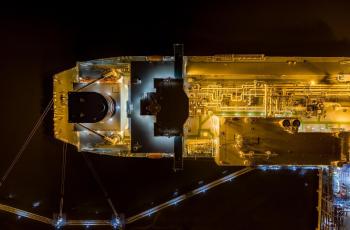
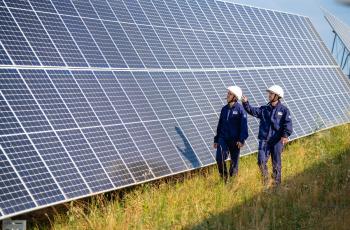
Many years ago, Total started diversifying into natural gas, and the Group is now a major player in this segment, with gas accounting for more than a third of our overall hydrocarbon production. Furthermore, Total is the world’s second-largest supplier of liquefied natural gas, which is mainly used for power generation. Regarded as the cleanest of the fossil fuels, natural gas generates few greenhouse-gas emissions. At the same time, the Group, via its subsidiary Total Energie, has been an active player in the photovoltaic solar energy industry since the 1980s. In 2004, we decided to build a solar-panel manufacturing plant in Toulouse, and more recently still, we moved to increase five-fold the capacity of our Photovoltech solar-cell plant in Belgium. In addition, Total is involved in wind power, with studies under way for onshore and offshore wind-farms, and the Group is also developing new bio-fuels.
Naturally, Total’s investment program is focused predominantly on oil and gas, but we will continue to bolster our involvement in renewable energies, even though there are still some difficult challenges to meet regarding competitiveness. We are also working on the capture and underground sequestration of CO2, capitalizing on the Group’s experience in underground gas storage. Total’s aim as an energy supplier is to provide everyone with a range of solutions that will satisfy both the desire for economic development and the need to protect our environment.

SEND TO A FRIEND PRINT CLOSE